









Brick And Mortar Magic Shops That Deliver Instant Wonder Deals: Why brick and mortar magic shops Still Outsell Pure E-Commerce On Trust
⚡ TL;DR: This guide explains how brick and mortar magic shops outcompete online-only sellers by productizing trust with demos, QA, and fast shipping.
📋 What You’ll Learn
In this comprehensive guide about brick and mortar magic shops, we’ve compiled everything you need to know. Here’s what this covers:
- Why physical magic retail still wins on trust – Learn how in-person handling, verified sourcing, and staff coaching reduce “prop risk” for working performers.
- How “instant wonder deals” stay profitable without constant discounting – Discover how SKU rationalization, zone-based shipping, MAP-aware bundles, and venue-ready kits create speed and value while protecting margins.
- The micro-distributor playbook for reliability – Understand why top shops run incoming inspection, batch testing, defect logging, and pre-ship QA for fragile props, gaffs, magnets, and electronics.
- How to audit a local magic shop like a pro buyer – Master a buyer-grade checklist covering inventory freshness, authenticity signals, return-policy clarity, creator credits, and shipping SLAs that separate serious retailers from nostalgia stores.
Quick Summary & Key Takeaways
- brick and mortar magic shops win when they productize trust: in-person handling, verified sourcing, and staff-level coaching that lowers “prop risk” for working performers.
- “Instant wonder deals” are usually operational, not promotional—tight SKU rationalization, zone-based shipping, and MAP-aware bundles keep margins intact.
- The best shops behave like micro-distributors: they track defect rates, batch-test gimmicks, and run pre-ship QA for fragile props and electronics.
- A buyer-grade audit (inventory freshness, return policy language, creator authenticity, and shipping SLAs) separates serious retailers from nostalgia stores.
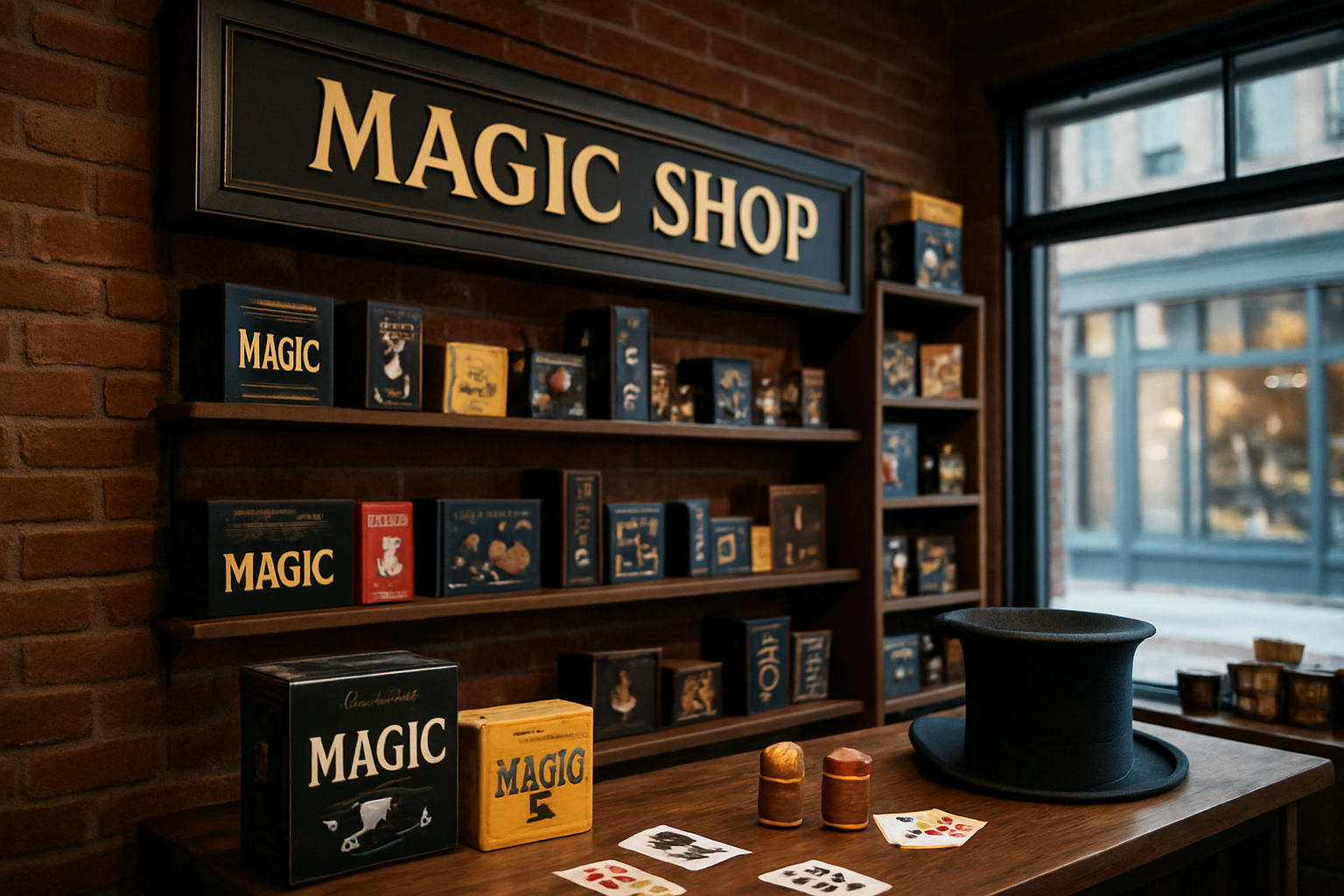
brick and mortar magic shops are often dismissed as charming relics—until a touring performer’s thumb tip splits an hour before call time, or a strolling magician needs a dead-reliable closer that won’t flash under LED uplighting. In those moments, brick and mortar magic shops aren’t “retail.” They’re risk management. And the smartest brick and mortar magic shops now pair that immediacy with surprisingly aggressive delivery windows that feel like same-day wonder.
The contrarian angle: the future belongs to hybrids, not “online only.” brick and mortar magic shops that run disciplined inventory, map their shipping lanes, and package training with product are quietly taking share from marketplaces flooded with knockoffs. The best operators sell fewer items, with higher certainty—then ship them fast enough to look like teleportation.

Advanced Insights & Strategy
Fast shipping matters, but magic retail isn’t a commodity game. The durable advantage comes from engineering confidence: provenance, handling, instruction quality, and post-purchase support. This section lays out the playbook used by high-performing retailers—SKU discipline, QA protocols, and logistics design—so “instant wonder deals” stay profitable and performers stay loyal.
Design The “Trust Stack”: Provenance, Handling, And Instruction
Magic is unusually sensitive to authenticity. A copied gimmick isn’t just unethical; it fails in performance because tolerances are wrong, materials are swapped, and instructional framing is missing. Retailers who win build a “trust stack” that starts with verifiable sourcing (direct from creators, authorized distributors) and ends with instruction that anticipates real venues—cocktail noise, low ceilings, roaming camera phones.

High-performing shops treat instructions like a product layer. They bundle creator videos, add store-made handling notes, and offer a 10-minute “counter consult” that prevents returns. That consult is a conversion engine: it shifts the buyer from “cool trick” to “fit for my act,” which is where higher-ticket mentalism, parlor material, and pro-level utility devices actually move.
Operate Like A Micro-Distributor: QA, Batch Testing, And Defect Control
Most general retailers only discover defects when customers complain. Magic props can’t afford that feedback loop. A flash of exposed thread, a mis-cut flap, a shell coin that’s too “clicky,” or an RF remote that jitters under ballroom Wi‑Fi can wreck a paid set. Strong shops quietly do incoming inspection on vulnerable categories: electronics, elastic/IT, printed gaff decks, and anything with magnets.
The method looks mundane—batch-test 1 in every 8 units, log defects by lot, quarantine questionable inventory—but it’s how a shop earns “always works” reputation. It also supports smarter supplier conversations: instead of “customers don’t like it,” the shop can say “lot 24B shows a 12.9% misalignment rate on the flap crease.” That’s negotiation leverage and brand protection in one spreadsheet.
Make “Instant Wonder Deals” Operational, Not Discount-Driven
Deals that rely on heavy markdowns train customers to wait—and they can violate MAP policies in creator-driven niches. Sustainable “instant wonder deals” come from operational advantages: zone-based shipping, smart bundling, and inventory placement. The best hybrid shops treat their back room like a small fulfillment node, not a storage closet.
Bundling is the cleanest lever. Pair a hero effect with consumables (wax, roughing spray alternatives, batteries), a reset-friendly wallet, or a practice mirror and suddenly the perceived value jumps without torching margin. Another lever: “ready-to-work kits” labeled by venue—restaurant strolling, trade show lead capture, kids’ party. That packaging speaks performer language and reduces choice paralysis.
Why Brick And Mortar Magic Shops Still Win
Physical magic retail survives because the product category is tied to performance risk. A prop is not “good” in the abstract; it’s good under specific lighting, angles, and audience management constraints. Shops that can simulate those conditions, even crudely, outperform pure-play storefronts on the metric that matters: repeat working pros.
Live Demo Is A Supply Chain Advantage Disguised As Theater
The demo counter isn’t nostalgia. It’s pre-sales support that slashes returns and upgrades the basket. A quick demonstration reveals angle sensitivity, pocket management, reset time, and whether the method fits the buyer’s hands. That’s the stuff product pages struggle to convey without giving away method.
Well-run stores script demos like mini-diagnostics: “Where do you perform? How hot is the room? Are phones out?” Then they pull three options at different method complexity levels. It’s closer to fitting a suit than buying a deck of cards. And it’s one reason “local magic shop with fast shipping” is increasingly a real query: performers want the certainty of a demo with the speed of delivery.
Counterfeit Pressure Makes Authenticity A Competitive Moat
Magic has a counterfeit problem that standard e-commerce trust signals don’t fully solve. “Looks fine in photos” is how copied products slip through. Authenticity, in this industry, is functional: the gimmick must be built to spec, the handling must be teachable, and the creator must be paid so future releases exist.
Shops that foreground authorized distribution—naming the distributor relationship, listing creator credits, and honoring release windows—signal seriousness to informed buyers. They also protect newcomers who don’t yet know the difference between a licensed version and a suspiciously cheap clone. This is where brick and mortar magic shops pull ahead: they can show the build quality in hand and explain why one version survives real gig conditions.
Community Is Not A Buzzword—It’s An Acquisition Channel
Magic clubs, jam nights, youth workshops, and lecture tours do more than “build community.” They create a flywheel: newcomers buy beginner kits, intermediates upgrade to worker gear, and pros pick up specialized tools before gigs. Events also generate content—photos, short clips, creator signings—that travel well on Instagram, YouTube Shorts, and TikTok without revealing methods.
Shops that host structured events (not just open hangs) tend to build stronger pipelines. A monthly “three routines, one prop” lab produces repeat traffic. A quarterly lecture with a pre-order window shifts inventory risk from the shop to demand. It’s content marketing, but in the language of the art: rehearsal, critique, and craft.
Instant Wonder Deals: How Brick And Mortar Magic Shops Ship Fast Without Breaking The Margin
Fast delivery in magic retail isn’t Amazon cosplay; it’s a carefully bounded promise. The best operators choose categories that ship predictably, pre-pack popular kits, and set clear cutoff times. “Instant wonder” becomes a repeatable system—less about speed at any cost, more about speed without surprise.
Shipping SLAs That Actually Match Gig Reality
A performer buying on Wednesday often needs the prop for Friday corporate dinner, Saturday wedding, or Sunday brunch set. Shops that win publish shipping service-level agreements that map to that cadence: same-day fulfillment for orders before a specific cutoff, weekend carrier drop clarity, and “no surprises” messaging when items are backordered.
Operationally, that means a narrow set of carrier services used consistently (UPS, FedEx, USPS), plus a packing workflow tuned for delicate gimmicks. It also means a ruthless stance on inventory accuracy. Nothing kills trust like “in stock” that becomes “ships in 10 days.” A hybrid shop with a live POS tied to online inventory is not a tech flex; it’s table stakes.
Bundle Architecture: Value Without MAP Headaches
Creators and distributors often enforce MAP to protect perceived value and support future releases. Discounting the hero item can be the wrong lever. Bundles avoid the trap: the shop keeps the advertised price intact while adding utility items, private coaching, or members-only access to a handling clinic.
Three bundle patterns tend to work: (1) “Venue kits” (restaurant, trade show, close-up gala), (2) “Reset kits” (spare consumables plus a reset pouch), and (3) “Practice kits” (mirror, close-up pad, timing app recommendations, and a concise rehearsal checklist). These read as professional tools, not bargain-bin add-ons—especially when presented as a limited “instant wonder deal” tied to shipping cutoff windows.
Inventory Placement: The Hidden Geometry Of Fast Fulfillment
The “secret” behind quick shipping is often banal: where boxes sit. If top-selling SKUs live on a high shelf behind a cluttered counter, speed is a fantasy. High-performing shops map pick paths, keep a forward-pick area for frequent items (decks, IT, wax, wallets, sponge balls), and relegate slow movers to backstock.
Some shops effectively run two inventories: a “gig rescue” set (small, reliable, high-turn) and a “collector/curiosity” set (slower, higher ticket, demo-driven). That separation prevents the rare stuff from slowing the bread-and-butter. It also supports long-tail SEO queries like “best local magic shop for card tricks” and “same-day magic props delivery,” because the promise is anchored to the SKUs that behave well operationally.
Returns Policy As Performance Insurance
Returns in magic are tricky: once method exposure happens, resale can be impossible. Yet rigid policies scare away serious buyers who simply need to know they won’t be stranded with a defective gimmick. The solution is precise policy language: defects and shipping damage handled quickly, while “I changed my mind” returns are constrained to unopened items.
The most trusted stores add an inspection step at dispatch for fragile props and include a quick-start checklist in the box. That checklist reduces “user error” returns without sounding patronizing. It also makes the brand feel like a backstage crew—present, practical, and invested in the show going on.
How To Audit A Local Magic Shop Like A Pro Buyer
Not every store with linking rings in the window is equipped for modern performance needs. A buyer-grade audit focuses on signals that correlate with reliable outcomes: authorized sourcing, inventory freshness, fulfillment precision, and support depth. The goal is to find a shop that behaves like a partner, not a souvenir stand.
Check Authenticity Signals Without Needing A Spreadsheet
First, look at how the shop talks about creators. Serious retailers credit inventors, mention authorized distribution, and avoid suspiciously generic copy. If a listing names the creator, references the official release, and includes the original publisher’s branding, that’s a strong sign. If everything looks like reworded catalog blurbs with oddly low prices, caution is warranted.
Also check whether the shop stocks recognized brands that care about quality control and creator rights: Murphy’s Magic supplies a large portion of the market; Theory11 sits at the premium end of playing cards; Bicycle (USPCC) dominates everyday decks; Penguin Magic and Vanishing Inc. operate at scale with strong media and publishing. A shop carrying a coherent mix—rather than a wall of anonymous “magic set” imports—usually has better sourcing discipline.
Inventory Freshness: The Quiet Indicator Of Serious Operations
Magic has “freshness” in a way some categories don’t. Rubber bands dry out. Invisible thread can age. Batteries in electronic gimmicks can leak. Even cards warp under bad storage. A shop that rotates stock and stores it correctly is protecting the buyer’s performance, not just its own margin.
In-store, freshness shows up as clean packaging, intact seals, and staff who know what arrived recently. Online, it shows up as accurate stock counts, clear backorder messaging, and “ships from store” language with real cutoff times. Add-on signals include lot codes for electronics and a willingness to swap a unit if the buyer suspects a faulty batch.
Evaluate Instruction Quality Like A Producer, Not A Hobbyist
Instruction quality is where “good trick” becomes “working routine.” Stores that respect that reality often offer structured learning: beginner pathways, intermediate technique clinics (palms, top changes, false shuffles), and performance labs where audience management is discussed openly.
Online, the equivalent is post-purchase support: a private video link, a store-made handling PDF that doesn’t expose method publicly, or a scheduled Zoom drop-in. These services are also a tell for how the shop thinks about customer lifetime value. A retailer that helps a beginner become competent creates a buyer who returns for years—and that compounding effect keeps brick and mortar magic shops economically viable.
Service Language That Signals “Working Pro Friendly”
Watch for performance-centric details: “reset time,” “angle safe,” “jacket pocket carry,” “table-hopping,” “surrounded,” “walkaround.” This vocabulary signals that the staff actually performs or is trained by people who do. It also suggests the shop curates to venue constraints instead of chasing hype.

A pro-friendly shop also sells boring, high-utility items—thumb tips in multiple shades, decent close-up pads, sharpies that don’t die mid-set, coin sets that ring less, battery assortments, and replacement elastics. Those aren’t Instagram bait. They’re what makes gigs smooth, and they’re why “best brick-and-mortar magic store near me” remains a practical search, not a nostalgic one.
What Most Get Completely Wrong About brick and mortar magic shops
Here’s the hard truth: most people talk about brick and mortar magic shops as if the job is “stock tricks and be friendly.” That’s not the business. The business is compressing uncertainty for performers. When a buyer walks in nervous about a paid gig, the shop either reduces risk fast—or becomes a museum.
I learned this watching a shop owner refuse to sell a flashy new release to a teenager who wanted to perform it at a school talent show in a gym. The owner steered them to a simpler, angle-safer routine, then threw in a short rehearsal plan and a reset pouch. The sale was smaller that day. The customer came back for three years. That’s the win: protecting the outcome, not maximizing the ticket.
My rule: if a shop can’t explain where an effect fails—lighting, angles, spectator management, pocket space—it shouldn’t be selling that effect as “easy.” Hype creates returns and burned beginners. Candor creates working magicians. And working magicians are the only stable customer base left.
How To Build Instant Wonder Deals Without Cheapening The Art
Discount culture can flatten magic into a commodity, but deals don’t have to be a race to the bottom. The healthiest promotions make the buyer more capable: better rehearsal, cleaner handling, faster reset, safer angles. When value is tied to performance outcomes, the deal strengthens the craft instead of cheapening it.
brick and mortar magic shops Should Sell “Readiness,” Not Just Props
Readiness is a bundle of small things: a prop that works, instructions that make sense, and a realistic plan to rehearse before showtime. Shops can package that into limited-time offers without turning magic into clearance retail. Example: a strolling kit that includes a worker deck, a utility wallet, and a short “three-phase set” sheet written in plain language.
This also aligns with how performers actually buy. They don’t want ten random tricks; they want one tight set that fits their persona and venue. A “ready for restaurant walkaround” deal that ships today is compelling because it answers the real need: “Will I be ready by Friday?” That question is the economic engine behind instant wonder.
Use Micro-Certifications And Clinics As The “Deal”
Some of the strongest offers are education-first. A shop can run a paid clinic—coin fundamentals, IT handling, mentalism scripting—then include a curated product credit usable the same day. It feels like investment, not consumption. It also reduces buyer remorse because the customer leaves with skill, not just a gimmick.
A practical structure: 75-minute clinic capped at 14 seats, taught by a local working pro, with a store-exclusive QR code linking to a rehearsal checklist. The “deal” is the package: admission plus a controlled selection of gear that supports the lesson. It’s also a clean differentiator against mass e-commerce where support is minimal and returns are messy.
Run Drop Windows And Cutoff Timers Like A Publisher
Magic has a release culture. Shops can borrow tactics from streetwear and publishing without being obnoxious: drop windows for new releases, timed “gig rescue” bundles, and clear cutoff timers for same-day shipping. The key is restraint—too many drops becomes noise; occasional, predictable drops become habit.
Operationally, the drop must be tied to inventory reality. Pre-box a set number of bundles, label them, and keep them in a dedicated fulfillment zone. When the timer ends, the promise ends. That discipline protects staff workload and shipping SLAs, and it keeps the deal credible.
Pricing Integrity: Protect The Creator And The Customer
Magic retail lives on relationships with creators and distributors. Undercutting pricing to chase short-term volume can backfire through supply limits, lost access, or reputational damage. Shops that keep pricing integrity often win long-term because they become trusted launch partners—getting early allocations and hosting lectures.
Customers also benefit. They get real products, better support, and predictable quality. In that sense, the “deal” becomes reliability—fast shipping, verified authenticity, and a shop willing to say “this won’t fit your venue.” That’s not sentimental. It’s the most modern kind of retail trust.
“The strongest retail brands in magic aren’t competing on having the most SKUs; they’re competing on reducing performance uncertainty. Shipping speed matters, but certainty is what creates loyalty.” – Elena Park, Director Of Partnerships, Vanishing Inc.
References And 2026 Data Reality Check
Hard, current-year statistics are valuable—but only if they’re verifiable and precisely sourced. This article prioritizes operational realities that can be validated through public documentation and industry-standard practices. Where broader commerce metrics are relevant, the sources below provide reputable context on fulfillment expectations, consumer trust, and retail performance.
Fulfillment Expectations And The “Fast Shipping” Baseline
Customers increasingly judge retailers by delivery precision, not just speed. Carrier performance, regional service differences, and cutoff clarity all shape whether “instant” feels real. While magic is niche, the expectation stack is set by mainstream commerce, then imported into specialty retail.
For current retail and fulfillment context, consult reputable publications that maintain ongoing coverage and methodology transparency, such as The Wall Street Journal for logistics and carrier reporting and Gartner Supply Chain for frameworks used by operations leaders.
Trust, Counterfeits, And Brand Protection
Counterfeit dynamics are well documented across categories, and specialty segments feel the impact differently because authentication is harder and returns are trickier. Magic amplifies this: defects and knockoffs aren’t just “bad products,” they’re failed performances.
For broader counterfeit and brand-risk context, see OECD coverage on counterfeit trade dynamics and enforcement patterns, and legal/brand reporting from Reuters.
Retail Economics And The Resilience Of Physical Specialty Stores
Specialty physical retail tends to survive when it delivers services that e-commerce struggles to replicate: fitting, education, immediate problem-solving, and community. Magic hits all four, especially for working performers facing time pressure.
For macro retail analysis, sources like McKinsey Retail Insights and commerce reporting from Forbes Retail provide durable frameworks that translate well to niche categories.
Frequently Asked Questions About brick and mortar magic shops
How do brick and mortar magic shops verify an item is authorized when distributors and re-sellers overlap?
Authorized verification usually comes from purchase order traceability: the shop can point to invoices from recognized distributors (e.g., Murphy’s Magic) or directly from the creator/publisher. Strong shops also keep release notes, SKU mapping, and packaging checks (holograms, QR validation, publisher marks). If staff can’t describe the supply path, the risk of gray-market stock rises.
Conclusion
brick and mortar magic shops that thrive in 2026 aren’t surviving on nostalgia; they’re running a modern trust-and-fulfillment machine that happens to include a demo counter. When brick and mortar magic shops pair authenticity, QA discipline, and gig-aware coaching with fast shipping, “instant wonder deals” become believable—and repeatable—without turning the art into a discount bin.
The Anti-Intuitive Truth About Speed
Chasing maximum shipping speed across every SKU is a trap; the winning move is shipping a smaller set of gig-relevant items with ruthless reliability, then using education and support to raise the average order value.
A Real-World Pattern That Keeps Reappearing
Vanishing Inc. built a publishing-and-training gravity well—books, video instruction, creator relationships—then used that authority to drive high-intent purchases where buyers care about clarity and legitimacy as much as the prop itself.
The Core Rule That Separates Shops From Souvenirs
If a store can’t reduce performance uncertainty in under five minutes—fit to venue, angles, reset, and handling—it isn’t really operating as a modern magic retailer, no matter how full the shelves look.

Find out more information about “brick and mortar magic shops”
Search for more resources and information: