The Asrah Levitation: Born From a Dare
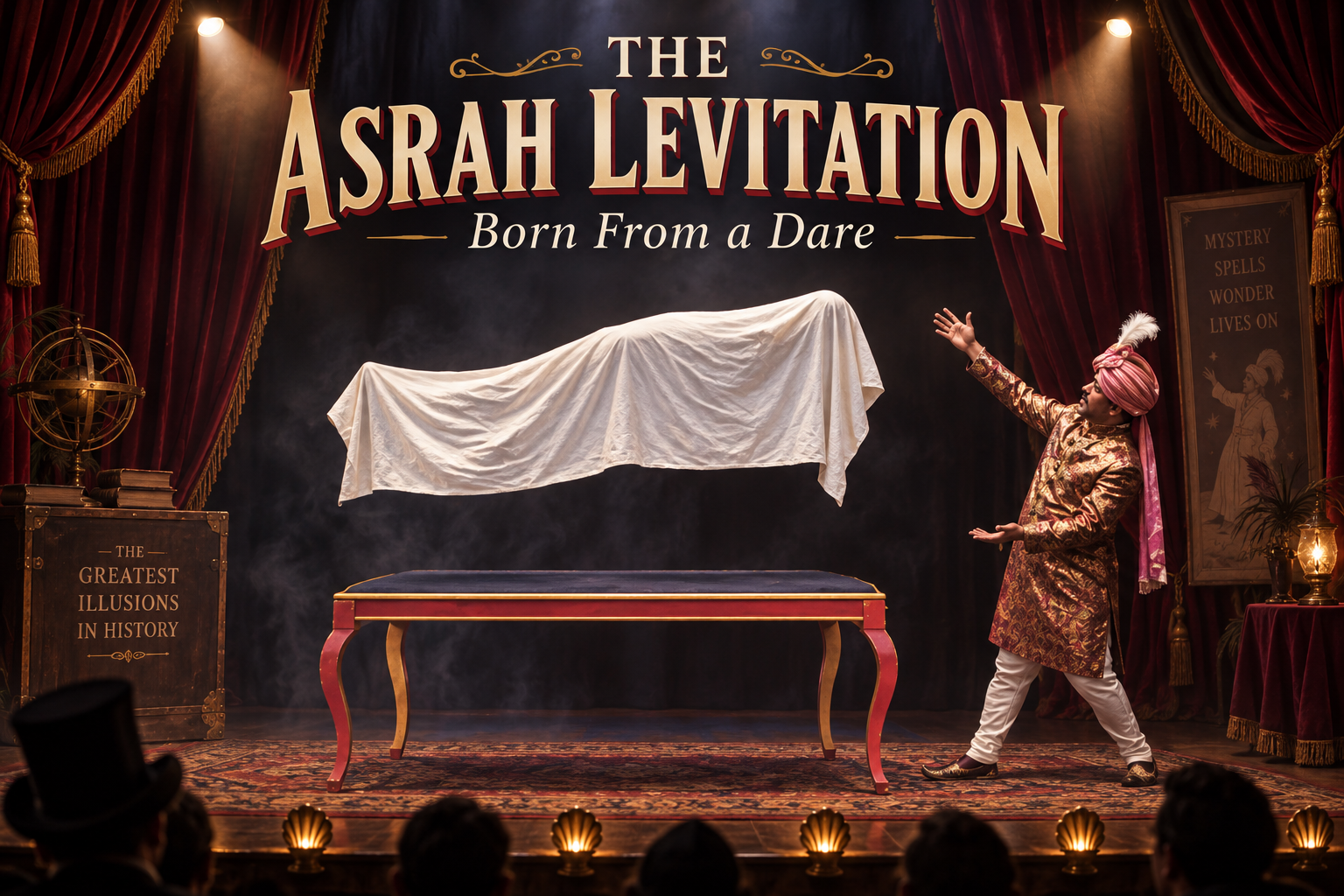
⚡ TL;DR: The Asrah Levitation: Born From a Dare. A magician’s assistant floats, a hoop passes clean around her, then she vanishes completely — Servais Le Roy’s Asrah began as a bar-room dare, sat locked away for years out of fear, and was tested only once, quietly, before it became a classic.
📋 What You’ll Learn
In this guide to the The Asrah Levitation: Born From a Dare, here’s what we cover:
- Learn how it started as a dare – Leon Bosco’s needling challenge to Servais Le Roy after a floating-card trick.
- Discover why Le Roy sat on it for years – he wasn’t confident audiences would believe what they were seeing.
- See how he tested it safely – a one-off tryout in Johannesburg, with a backup plan in case it flopped.
- Understand why it became a classic – how a minor add-on took over the show, reportedly impressing even Thomas Edison.
Quick Summary & Key Takeaways
- The Asrah Levitation was created by Belgian magician Servais Le Roy after his stage partner Leon Bosco challenged him to make a floating-card effect work “with a woman.”
- Le Roy built the illusion within weeks, originally naming it “The Mystery of Lhassa,” but kept it secret for nearly five years, unsure whether audiences would accept it.
- He tested it exactly once, quietly, in Johannesburg — with Bosco stationed backstage ready to stage a loud comic distraction if the illusion failed.
- It worked. Renamed “Asrah,” the effect was folded into Le Roy’s London show (most commonly dated to 1914) as a minor addition — and quickly became the act’s headline piece.
- The illusion left a lasting mark on magic, reportedly impressing even Thomas Edison, and it’s still performed and taught today.
Some of magic’s most famous illusions were born from confidence. Asrah was born from doubt. Servais Le Roy built the entire effect in a matter of weeks — then sat on it for nearly five years because he genuinely wasn’t sure an audience would believe what he was showing them.
When he finally tested it, he did it as quietly as possible, with an actual contingency plan in case it bombed. Here’s how a levitation built on that much hesitation became one of the most enduring illusions in stage magic.
A Dare That Started With a Floating Card
Servais Le Roy was one-third of “Le Roy, Talma and Bosco,” a celebrated act built around Le Roy’s illusions, his wife Talma’s renowned coin manipulation (she was billed as “The Queen of Coins”), and Leon Bosco’s comedy. Le Roy had already worked out a small floating-card effect when Bosco needled him with a question that stuck: if you can do that with a playing card, why can’t you do it with a woman?
That offhand challenge became the seed of what would eventually be called Asrah.
Five Years of Silence
Le Roy took the dare seriously. Within weeks, he’d worked out a full version of the illusion, originally calling it “The Mystery of Lhassa” — a nod to the kind of exotic, far-off mystique that sold tickets in that era of magic. But having a working method wasn’t the same as trusting it in front of a paying crowd. Le Roy held onto the effect for nearly five years without performing it publicly, worried that audiences simply wouldn’t accept what they were seeing.
That kind of caution is rare in magic history, where performers are usually racing each other to be first. Le Roy’s patience says a lot about how genuinely uncertain even a skilled illusion designer can be about his own best idea.
A Quiet Test in Johannesburg, With a Backup Plan
When Le Roy finally decided to test the illusion, he didn’t do it in London, in front of his peers and rivals. He chose Johannesburg, intending it as a single, one-off performance far from the magic world’s usual audience. And he didn’t test it without a safety net: Bosco stood backstage with a tray of crockery, ready to stage a loud, clattering comic interruption if the illusion fell flat — a way to cover an embarrassing failure with a laugh instead of silence.
It’s a small detail that says a lot about how nerve-wracking that first performance really was. This wasn’t a magician confidently unveiling a masterpiece. It was a calculated, hedged experiment.

From Minor Bit to Headline Act
The Johannesburg test worked. Le Roy renamed the illusion “Asrah” and brought it back to London, where he slotted it into the show as a secondary piece — not the main event. Audiences had other ideas. The effect quickly outgrew its modest billing and became the centerpiece of the entire act, generating exactly the kind of word-of-mouth buzz within theatrical and magic circles that Le Roy had spent five years too nervous to risk.
The illusion’s reputation reportedly reached even Thomas Edison, who is said to have praised its power to override rational thought through sheer visual conviction — a remarkable endorsement for an effect its own creator once doubted enough to shelve for half a decade.
Why It Outlasted Its Rivals
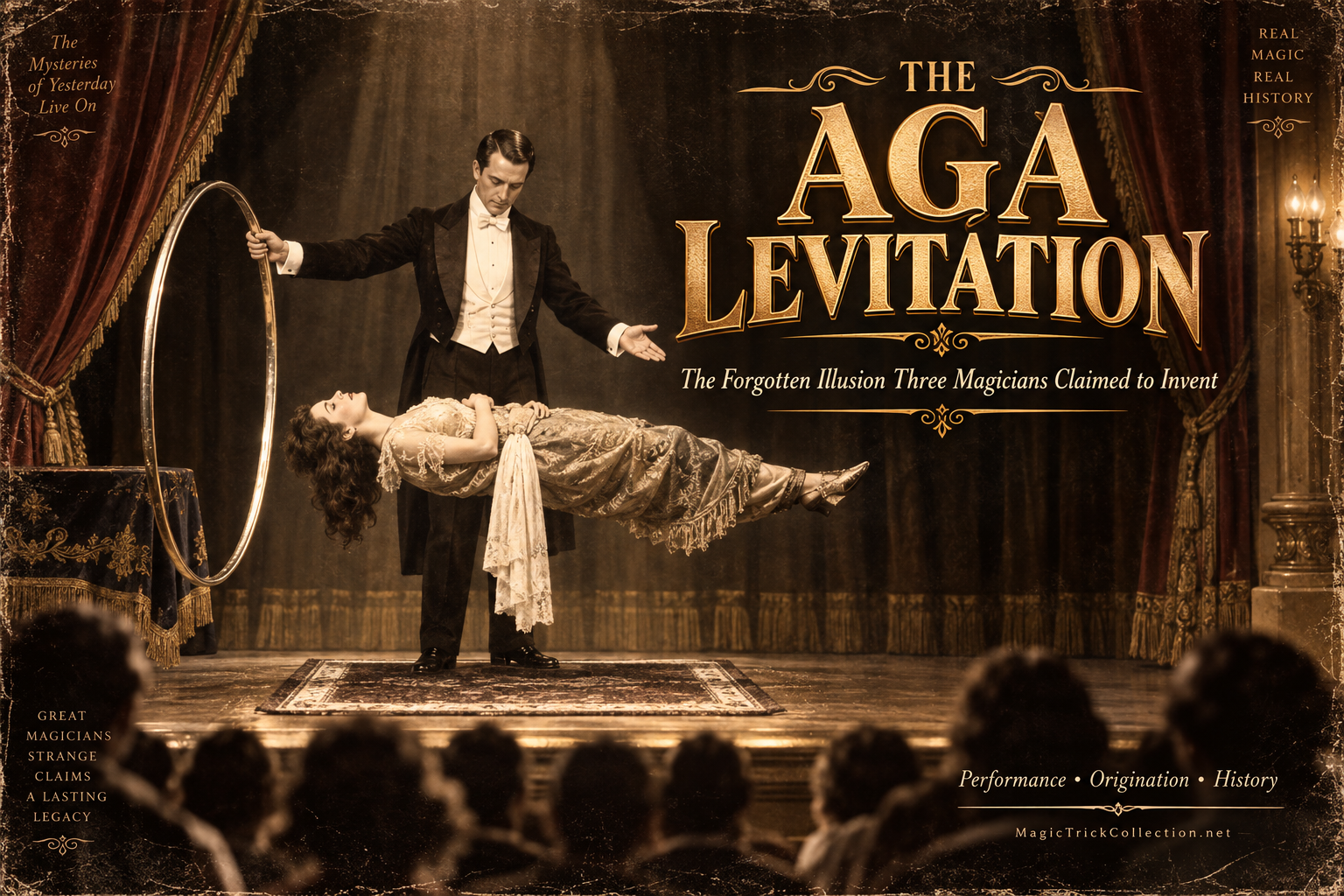
Asrah wasn’t the only levitation competing for attention in the early 1900s. Around the same period, a German-originated effect called the Aga Levitation was drawing crowds with its own selling point: performing the float in full daylight, with a hoop passed around the body to prove there were no hidden wires. For a while, the Aga was arguably the bigger sensation.
What gave Asrah its staying power wasn’t a flashier gimmick — it was a complete story. Rise, ring-pass, vanish. A performer floats, is proven “clean,” and then disappears entirely, all within one clean dramatic arc. That three-beat structure gave magicians something easy to build a whole act around, and it’s likely a big part of why Asrah is still performed and taught today, while the Aga has faded into a footnote for historians and collectors.
A Piece of History Worth Collecting
Asrah’s origin story — a dare, half a decade of hesitation, a hedge-your-bets test in a city far from home — is exactly the kind of magic history that makes vintage apparatus and ephemera worth collecting. These aren’t just old props; they’re physical connections to a moment when a magician wasn’t even sure his own best idea would work.
If illusions with that kind of pedigree interest you, it’s worth browsing what’s available through MagicTrickCollection.com, where pieces with genuine performance history are treated with the respect that stories like this one deserve.
Conclusion
Asrah’s legend usually gets told as a triumph — a magician’s masterpiece that defined an era of stage illusion. The truer story is more human: a dare taken too personally, five years of second-guessing, and a test run designed entirely around the possibility of failure. That the illusion succeeded anyway, and outlasted flashier rivals like the Aga, is what makes it worth remembering — not as a perfect trick, but as proof that even magic’s biggest triumphs usually start with real doubt.