
The Aga Levitation The Forgotten Illusion
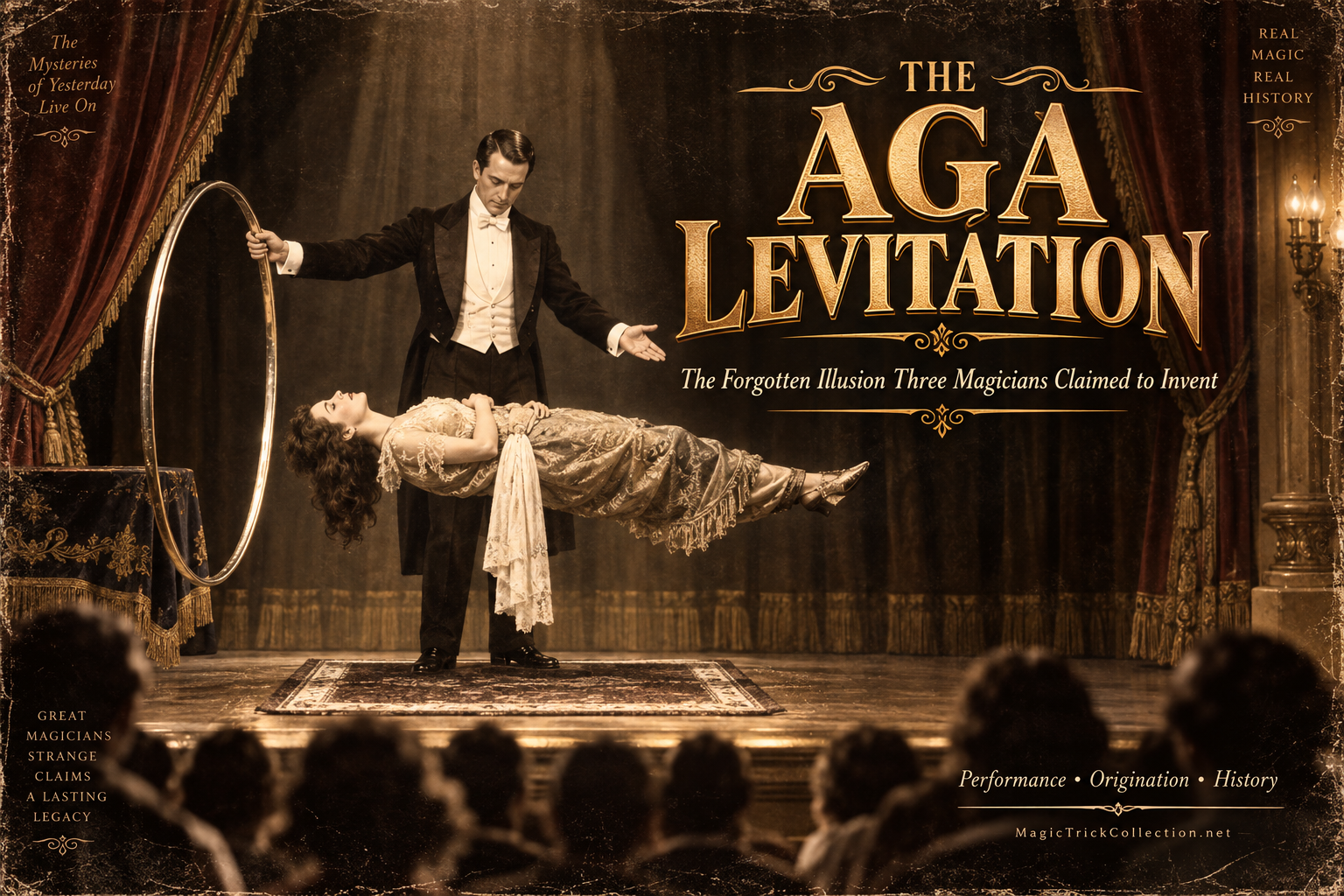
⚡ TL;DR: The Aga Levitation; Three German magicians each claimed to have invented it, a London department store gave it its name, and for a few years it was the levitation everyone wanted — before a rival effect quietly buried it.
📋 What You’ll Learn
In this guide to the The Aga Levitation: The Forgotten Illusion Three Magicians Claimed to Invent, here’s what we cover:
- Meet the three rival inventors – why magic history still can’t agree on who actually created the Aga first.
- Discover where the odd name came from – a London department store, its managing director’s first name, and a bit of marketing cleverness.
- See why it was considered a technical leap – the Aga let a performer levitate in broad daylight, with a hoop passed clean around the body.
- Learn why it lost the spotlight – how a rival illusion from Servais Le Roy eventually eclipsed it in the magic world.
Quick Summary & Key Takeaways
- The Aga Levitation’s true inventor is disputed among three German magicians: Albert Winckler (stage name Carlo Venturini), Ernst Hartwig Seeman, and Otto Heinemann.
- Its name likely comes from “Alec” plus “Gamage” — the London department store, A.W. Gamage Ltd., that sold and marketed the illusion.
- The Aga’s big selling point was that it could be performed in full daylight, with a hoop passed around the floating performer to prove there were no wires.
- Magic dealer and author Will Goldston helped introduce and popularize the illusion in England in the early 1900s.
- The Aga was eventually overshadowed by Servais Le Roy’s Asrah Levitation, which became the more famous and widely performed effect.
For a few years in the early 1900s, the Aga Levitation was the illusion every touring magician wanted. A performer floated in midair, in full view, in full light — and to prove it wasn’t a trick of shadows, the magician would pass a hoop clean around the body. No one could explain it. And then, almost as quickly as it rose to fame, it disappeared from the spotlight, eclipsed by a rival effect that’s still famous today.
Here’s the strange, disputed story of how it got there — and why it faded.
A Trick With Three Rival Inventors
Ask who invented the Aga Levitation and you won’t get a clean answer. Magic history credits three different German magicians, all working around the same period: Albert Winckler, who performed under the stage name Carlo Venturini; Ernst Hartwig Seeman, known professionally as Professor Seeman; and Otto Heinemann. Each incorporated a version of the floating illusion into his act, and it’s genuinely unclear who did it first.
Heinemann is said to have presented something called “The Mysterious Aga” years before Winckler eventually sold the rights to a British magic dealer. That kind of tangled, contested origin is common in illusion history — effects spread between performers long before anyone thought to write down who did what first, and by the time it mattered enough to matter, the paper trail was already muddy.
Where the Name “Aga” Really Came From
The name itself has a fittingly odd origin. It’s believed to come from “Alec” — the first name of the managing director of A.W. Gamage Ltd., the famous London department store — combined with the first letters of “Gamage.” Gamage’s wasn’t just a shop; it was one of the major suppliers of magic apparatus in Britain at the time, and putting its name (however disguised) on a hot new illusion was smart marketing.
It’s a reminder that magic history isn’t only shaped by performers and inventors — retailers and dealers played just as big a role in deciding which illusions became famous and which quietly disappeared.
A Levitation You Could Watch in Broad Daylight
What made the Aga such a sensation wasn’t just the floating body — it was how openly it could be shown. Earlier levitation illusions often relied on dim lighting, heavy misdirection, or careful staging to hide their workings. The Aga was advertised as something different: a levitation that could be performed “in full daylight,” even under the glare of stage limelight, with a hoop passed around the performer’s body — twice — while she hovered in the open.
At the time, that was a genuine leap forward. A trade write-up from 1906 predicted the illusion’s success “should be phenomenal” for any enterprising performer willing to add it to a music hall act — high praise in an era when magicians lived and died by how convincingly their illusions held up under real theater conditions, not ideal ones.
How Will Goldston Brought It to England
The Aga’s journey from a German stage trick to a British sensation runs through Will Goldston, one of the era’s most influential magic dealers, authors, and promoters. Goldston is credited with helping bring the illusion to England and marketing it through Gamage’s, putting it in front of a much wider audience of working performers than it likely would have reached on its own.
Goldston’s involvement mattered. In magic’s early 20th century boom, a great illusion with no dealer behind it could vanish just as easily as a mediocre one with the right marketing. The Aga had both a strong effect and a strong distributor — for a while, that combination made it one of the illusions to own.
Eclipsed by a Rival: Asrah
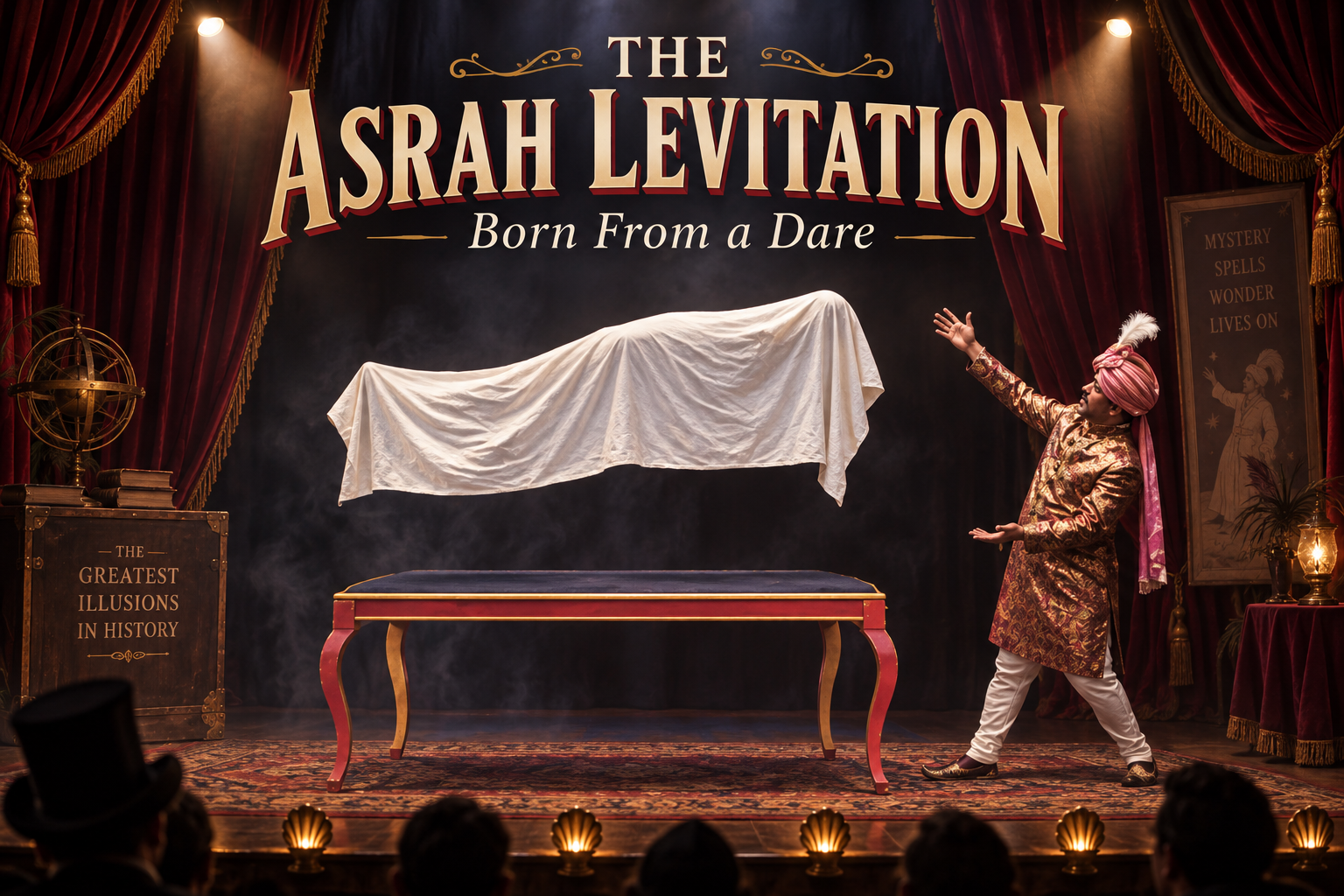
The Aga’s moment in the spotlight didn’t last. Around the same period, Servais Le Roy — one of the great illusion creators of the era — introduced his own levitation, which he called Asrah. Where the Aga leaned on its “full daylight” spectacle, Asrah offered magicians a different kind of appeal: a clean, theatrical vanish-and-float sequence that became easier to sell as a complete piece of stage magic.
Over time, Asrah became the illusion magicians reached for, and the one that’s still performed and taught today. The Aga didn’t disappear from history entirely, but it settled into the role every once-popular illusion eventually plays: a fascinating footnote, remembered by historians and collectors more than by working performers.
Why Collectors and Magicians Still Care
That footnote status is exactly what makes the Aga interesting today. It’s a snapshot of a moment when magic illusion was evolving fast, when rival inventors were racing each other to the same idea, and when a department store’s marketing decisions could shape which effects survived. For collectors, apparatus and ephemera connected to illusions like the Aga carry real historical weight — they’re artifacts from a genuine turning point in stage magic, not just old props.
If that kind of magic history interests you, it’s worth exploring what’s available through MagicTrickCollection.com, where pieces with real performance lineage are treated with the care that history like this deserves.

Conclusion
The Aga Levitation never got the clean, single-inventor origin story that makes for easy legend — it got three competing claimants, a punny name borrowed from a department store, and a rival illusion that eventually stole its spotlight. But for a brief window in magic history, it was the effect that made audiences believe a person could float in broad daylight with nothing hidden at all. That’s a story worth remembering, even if the illusion itself mostly isn’t performed anymore.



[…] The Aga Levitation: The Forgotten Illusion Three Magicians Claimed to Invent […]
[…] The Aga Levitation: The Forgotten Illusion Three Magicians Claimed to Invent […]