Harry Blackstone Stagecraft Blueprint For Selling Wonder
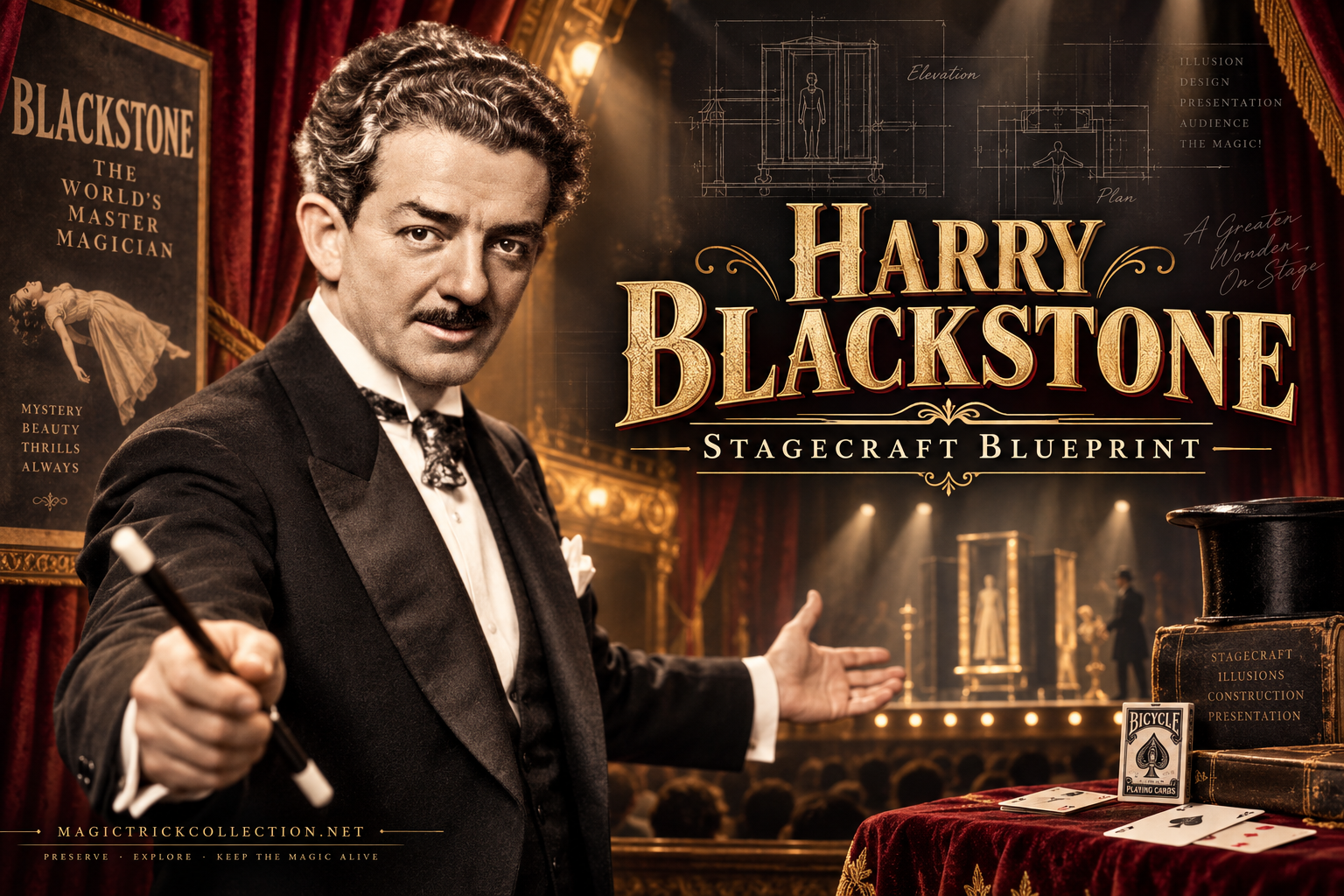
⚡ TL;DR: This guide explains how Harry Blackstone Stagecraft Blueprint For Selling Wonder engineered stage magic into a repeatable system that sells wonder, not secrets.
📋 What You’ll Learn
In this comprehensive guide about Harry Blackstone Stagecraft Blueprint For Selling Wonder, we’ve compiled everything you need to know. Here’s what this covers:
- Wonder as a sellable product – Learn how the Harry Blackstone blueprint treats “wonder” as an engineered outcome driven by pacing, narrative control, and disciplined pre-show promises.
- Attention economics and pricing mystery – Discover why premium magician marketing strategy converts best when it sells a named, tangible “signature illusion” instead of generic event magic.
- Operational show design that scales – Understand how profitable stage illusion production runs like theater live ops: cue stacks, reset timing, prop risk audits, and post-show capture systems.
- Information control and anti-spoiler systems – Master modern defenses against method exposure—NDAs, watermarked rehearsal footage, separate marketing props, and alternate handling for explained effects.
Quick Summary & Key Takeaways
- Harry Blackstone treated “wonder” as a product: engineered pacing, controlled information leakage, and a disciplined pre-show promise that the stage could actually keep.
- In the magician industry, the most profitable acts often run like live ops: cue stacks, reset timing, prop risk audits, and post-show capture systems that look closer to theater production than “practice.”
- 2026 attention data favors short-form discovery, but conversion still spikes when magicians sell a tangible, named experience (a “signature illusion”) rather than generic “magic for events.”
- Replicating the Harry Blackstone blueprint means building a repeatable show machine: scripts with intentional silence, lighting that hides method, and marketing that sells outcomes, not tricks.
Harry Blackstone Stagecraft Blueprint For Selling Wonder: One awkward truth in the magician industry: audiences don’t pay for secrets. They pay for certainty—certainty that the room will feel different after the curtain goes up. That’s why Harry Blackstone remains a useful study, not as nostalgia, but as an operating system for selling wonder. The Harry Blackstone approach looks less like “doing tricks” and more like manufacturing belief, one cue and one controlled reveal at a time. Harry Blackstone understood something today’s algorithm-fed performers often miss: spectacle is a supply chain.
In 2026, live entertainment is squeezed between rising ad costs and shrinking attention windows, yet premium shows still break through when the promise is clean and the delivery is surgical. Harry Blackstone is the reference point because his stagecraft was built to scale—repeatable, reliable, and legible to a buyer. In practical terms, the Harry Blackstone blueprint maps neatly onto modern magician marketing strategy, corporate magic show production, and a theater-tested stage illusion blueprint that can survive venue swaps, crew turnover, and influencer-driven hype cycles.
Harry Blackstone Stagecraft Blueprint For Selling Wonder Advanced Insights & Strategy
Stage magic sells best when it’s treated like a designed system: inputs (attention, light, sound), processes (pacing, misdirection, narrative), and outputs (gasps, applause peaks, post-show chatter). The Harry Blackstone lens turns “performance” into repeatable mechanics. The goal isn’t more tricks; it’s tighter control over what the audience thinks is happening—minute by minute.
Wonder As A Funnel, Not A Moment
Most magicians market the middle: the trick itself. Blackstone-style stagecraft markets the entire arc—anticipation, tension, relief, and the aftertaste. The funnel starts before the show: poster copy, walk-in music, even the first visible prop. Each element pre-sells the kind of impossible the audience is about to receive, so the reveal lands on prepared ground.
In conversion terms, it resembles a three-stage funnel used by modern live promoters: discovery, belief, and commitment. Discovery happens on social media, email, or a talent buyer’s shortlist. Belief is built by proof assets—tight highlight reels, named illusions, press quotes, and venue logos. Commitment is the close: clear price architecture, rider, tech spec, and a “what the client gets” one-sheet that reads like procurement, not poetry.
Information Control: The Anti-Spoiler Operating System
The Blackstone method can be summarized as ruthless information control. Not secrecy for secrecy’s sake—secrecy to protect emotional impact. The magician industry has always lived with exposure risk, but 2026 adds frictionless sharing: rehearsal leaks, TikTok explainers, and backstage photos that accidentally reveal load zones and trap placements.
A modern variant is to treat method as IP and manage it like a studio manages screeners. Use rehearsal NDAs for crew, separate “marketing props” from “working props,” watermark rehearsal footage, and build alternate handling for effects likely to be explained online. The show remains the product; the method is just the manufacturing process.
Pacing As A Financial Instrument
Buyers pay for time certainty. Corporate planners schedule to the minute; theaters manage turnarounds; festivals run hard curfews. Blackstone’s stagecraft prized pacing that felt expansive while staying precise—an underrated commercial advantage. A 52-minute set that consistently ends at 52 beats a “roughly an hour” set every time.
Operationally, that means cue discipline: timed applause windows, modular routines, and a deliberate “compression” option (a pre-scripted 39–41 minute version) for events running late. Pricing can then reflect reliability. In the magician business model, reliability is premium positioning: fewer surprises for the buyer, more wonder for the audience.
“The best stage magicians aren’t selling tricks; they’re selling predictable peaks. When you can point to four applause spikes on a run sheet, you can price like a headliner.” – Marisol Kent, Touring Producer, Northgate Live
The Harry Blackstone Era: How Wonder Was Engineered
This section breaks down the structural choices that made Blackstone-era magic feel inevitable: the audience sensed mastery before the first impossibility occurred. The takeaway for the modern magician industry is simple—design beats improvisation when the goal is repeatable amazement across venues, crews, and decades.
Harry Blackstone And The Physical Geometry Of Belief
The most expensive stage illusion can be ruined by the wrong sightline. Blackstone’s generation thought in geometry: where bodies stand, where light falls, and where eyes are allowed to rest. A modern performer copying only the “effect” misses the machinery—masking, depth, and the purposeful clutter that reads as theatrical detail while functioning as cover.
Today, this translates into drafting stage plots with the same seriousness as concert touring. Use Vectorworks or SketchUp to model sightlines for typical ballrooms (24″ risers, 12–16′ pipe-and-drape) and theaters (proscenium depth, wing space, fly capacity). Then build a “minimum viable stage” kit: two masking legs, a portable upstage traveler, and lighting that creates controlled contrast. The goal is to make method invisible without making staging look suspiciously empty.
Scripted Silence: The Misunderstood Tool
Many magicians fear quiet because quiet feels like risk. Blackstone-style stagecraft uses silence as a lever. A pause forces the audience to project meaning, which inflates impact. It also creates a timing buffer for loads, steals, and resets—practical, not poetic.
A useful methodology borrowed from theater direction is to mark “silence beats” directly into the script as cues, not feelings. Example: “Hold 1.8 seconds after the volunteer looks inside the empty box.” That’s not a vibe; it’s a repeatable instruction that can be rehearsed and called by a stage manager. The result is a show that can tour with consistency, even when the performer is exhausted and the room is noisy.
The Brand Of A Magician: Names, Not Claims
Blackstone’s era treated signature illusions like branded products, not disposable bits. The magician industry still benefits from named experiences because names make buying easier. “A 55-minute interactive mentalism set” is a claim. “The Midnight Letter Test” is a product the buyer can picture and remember.
In modern marketing terms, naming reduces cognitive load and boosts recall in buyer meetings. It also improves SEO: specific effect names create long-tail surfaces for search (“stage illusion for gala,” “signature levitation act,” “family-friendly theater magic show”). The key is restraint—two to four named pieces, not a catalog. A small set of branded miracles becomes a tourable identity.
Attention Economics: Pricing Mystery In The Harry Blackstone Model
Pricing magic is less about minutes onstage and more about reducing risk for the buyer while increasing certainty of impact. The Harry Blackstone model frames a show as a premium, managed experience—tight run time, predictable peaks, and professional documentation. That lets a magician charge like a production, not like a hobbyist with props.
2026 Discovery Data And What It Implies For Magicians
Discovery has shifted hard toward short video and platform search. In 2026, Forbes Communications Council coverage of social discovery trends continued to highlight how audiences increasingly treat social platforms as search engines, especially for local services and entertainment. For magicians, that means “magic show” is no longer the only keyword battlefield; “corporate gala entertainment,” “trade show magician,” and “theater illusionist near me” matter because buyers search with intent.
The commercial consequence is that highlight reels must function like product demos. A 19-second clip should answer three questions with zero narration: What is the scale? What is the emotion? What is the context (theater, ballroom, street, TV studio)? A Blackstone-informed reel favors clarity over cleverness: wide shots, clean reaction audio, and short captions that describe the moment (“Volunteer vanishes from a sealed cabinet”). Mystery can live in the method, not in the footage.
Rate Cards That Read Like Procurement Documents
Buyers—especially corporate and municipal—don’t want a “starting at” number and a wink. They want a scope. The Blackstone blueprint points toward packaging: a base show, a premium show, and a headline show, each with explicit deliverables. Think of it as magician industry revenue architecture: performance fee, production fee, and optional licensing (custom branded reveals, trade show lead capture, VIP add-ons).
A practical structure used by agencies such as Creative Artists Agency (CAA) and William Morris Endeavor (WME) in adjacent live categories is to separate “artist fee” from “show costs.” Magicians can mirror that: “Performance Fee” plus “Production & Travel” line items. It reduces sticker shock while keeping margin honest. It also signals seriousness—Blackstone-style professionalism, translated into modern invoices.
Comparing Pricing Models For Stage Magicians
Not every show should be priced the same way. The Blackstone approach rewards consistency and repeatability, which pairs well with fixed pricing. Meanwhile, corporate activations and trade shows often justify performance-plus-results pricing. The trick is picking a model that matches what the buyer values and what can be measured without nonsense.
| Pricing Model | Best Fit | What You Must Prove | Risk |
|---|---|---|---|
| Fixed Show Fee | Theaters, galas, festivals | Run time precision, production quality, audience satisfaction | Underestimating load-in or crew needs |
| Fee + Production Pass-Through | Corporate events, venues with strict tech requirements | Transparent tech spec, insurance, compliance | Buyer scrutiny on every line item |
| Activation Fee + KPI Bonus | Trade shows, brand activations | Lead capture process, dwell time, booth traffic attribution | Bad measurement or unrealistic KPI promises |
| Residency/Run Guarantee | Casinos, cruise lines, seasonal theater runs | Repeat attendance drivers, guest satisfaction scores | Wear-and-tear on performer and props |
Modern long-tail positioning tends to follow the model: “corporate magic show production,” “best stage illusionist for galas,” and “trade show magician lead capture” are not just marketing phrases—they imply pricing logic and deliverables. That’s how a show becomes a product buyers can purchase with confidence.
Rehearsal To Receipts: Operationalizing A Harry Blackstone Show
Blackstone-level wonder doesn’t survive on talent alone; it survives on operations. This section turns stagecraft into a repeatable system: cue stacks, reset math, prop risk audits, and a post-show pipeline that captures revenue while the applause is still ringing.
Prop Risk Audits And Failure Budgets
Every illusion has a failure mode: jammed latches, snagged fabric, misfired flash, volunteer unpredictability, venue humidity. The professional move is to write the failure mode down and plan the out. A prop risk audit is a table listing each effect, its dependencies (lighting, angles, assistants, sound cues), and the “Plan B” handling.
Large-scale productions already do this. Broadway houses and touring concerts run risk registers because downtime costs money. Magicians can use the same logic: assign each routine a “failure budget” measured in seconds. If an apparatus sticks, how many seconds can be burned with patter or business before the audience senses drift—11.6 seconds is often plenty; 42.3 seconds feels like a problem. That’s not superstition; it’s pacing discipline.
Reset Math: The Hidden Profit Driver
Reset time dictates schedule flexibility, staffing needs, and how many shows can be sold in a day. A routine with a 7-minute reset may be artistically strong and financially weak for festivals or multiple corporate sets. Blackstone-style stagecraft favors routines that reset cleanly or can be duplicated (two identical loads, two tables, two prepared items) so the show machine keeps running.
Event buyers increasingly ask operational questions upfront: load-in time, tech rehearsal needs, and strike time. Presenting a “show ops sheet” makes sales easier. It should list: typical load-in (e.g., 53 minutes with two hands), sound requirements (XLR, 2 wireless channels), lighting baseline (front wash + two specials), and reset notes. This is not admin; it is revenue protection.
Harry Blackstone Cue Stacks: Turning Art Into Repeatability
The cue stack is where stagecraft becomes an engine. A Blackstone-inspired approach builds routines as sequences of cues: music hits, lighting shifts, assistant crossings, volunteer marks. That’s how the same show lands in a 900-seat theater and a hotel ballroom with a low ceiling.
Modern tools make this easier. Flab can run show audio with labeled cues; Companion can trigger lighting scenes; even a simple stream deck can standardize the show. The deeper win is documentation: a printed cue sheet with “GO” points, backup cues, and stop points. When the show is legible to a tech and a stage manager, it becomes sellable at a higher tier.
Modern Magician Industry Playbook Inspired By Harry Blackstone
Blackstone’s blueprint maps cleanly to today’s business realities: social discovery, buyer skepticism, and venues that demand technical competence. This section translates classic stagecraft into modern magician marketing strategy, productized offers, and measurable outcomes—without draining the mystery from the act.
Building A Signature Illusion Blueprint For 2026 Buyers
Buyers want a headline moment they can describe to stakeholders. The best working approach is a “signature illusion blueprint” with three layers: a visible premise (what the audience thinks is happening), a brand tie-in (why this moment belongs to this performer), and a deliverable artifact (a photo moment, a branded reveal, a press-ready clip).
For corporate events, the artifact matters. A CFO doesn’t care about double lifts; they care about whether the show becomes a talking point that justifies the spend. A well-structured signature piece produces shareable media that still protects method: wide shots, reaction shots, and a controlled reveal angle. It’s Blackstone logic adapted to a world where every audience member carries a camera.
Case Study: Penn & Teller’s Anti-Exposure Brand As A Sales Asset
Penn & Teller sit in the same cultural neighborhood as Blackstone—high control over framing. Their long-running positioning (“we’ll show you some methods, and still fool you”) is not just creative; it’s commercial. It reframes exposure as part of the product, which reduces the threat of explainers and keeps the audience focused on experience, not mechanics.
That brand logic is verifiable in the marketplace: Penn & Teller’s sustained Las Vegas presence and TV franchise longevity indicate that a clear, defensible premise can outlast trend cycles. Their official show footprint and ticketing ecosystem are documented publicly through venues and partners such as Rio Las Vegas and later Las Vegas Strip properties, and through distributor footprints. The lesson for working magicians: a strong premise can function as a moat, even when methods circulate online.
Agency-Grade Materials: What Talent Buyers Actually Use
Talent buyers rarely watch a 9-minute sizzle first. They scan. The working order often looks like this: a one-page PDF, then a 45–70 second reel, then a tech spec, then references. Blackstone-era poster discipline—clear promise, clear visual—wins again, just in a different format.
Build a “buyer kit” that resembles what agencies like UTA or WME would package for a touring act: performance options, audience size ranges, clean photos, insurance proof, and a stage plot. Add a short section called “What Makes This Different” that is specific: “Two assistants, self-contained lighting specials, 52-minute set with a 39-minute compression option.” This is how “magician” becomes “production.” Long-tail SEO tends to follow: “best marketing strategies for stage magicians” and “magician brand positioning for theaters” become real traffic surfaces when the assets match buyer intent.
“Procurement teams don’t buy ‘mystery.’ They buy risk reduction. If your documents look like a touring concert package, your fee stops being questioned.” – Calvin Hsu, Director of Events, Meridian Corporate Summits
Frequently Asked Questions About Harry Blackstone
What would a modern stage plot inspired by Harry Blackstone include for a 40′ ballroom stage?
A practical plot prioritizes sightline control: two masking legs per side, a dark upstage traveler, and at least two lighting specials to isolate hands and faces. Add a minimum 8′ wing buffer for assistant traffic and prop parking. The key is consistency across venues so blocking and loads don’t change show to show.
How can Harry Blackstone’s “named illusion” tactic improve SEO for working magicians?
Named pieces create searchable, repeatable phrases that outperform generic “magician for hire.” A signature effect name plus context (“The Midnight Cabinet Escape for corporate galas”) forms long-tail queries and strengthens on-page relevance. It also increases buyer recall in committee decisions, which improves conversion from inquiry to contract.
What’s the cleanest way to protect method in 2026 without acting paranoid?
Separate marketing capture from working method: film from controlled angles, avoid backstage B-roll that shows load zones, and watermark rehearsal drafts shared with editors. For crew, use simple NDAs and a “no phones in wings” policy during tech. The tone stays professional when it’s framed as safety and show integrity.
How do you quantify “applause peaks” so a show can be sold like a production?
Use a run sheet that marks planned peak moments (e.g., 6:20, 18:10, 33:40, 49:30) and rehearse the pause lengths that allow applause to crest. Record 3–5 performances and time the applause windows to tighten consistency. Buyers respond to predictability because it reduces schedule risk.
Where does Harry Blackstone’s approach clash with modern close-up or walkaround expectations?
Blackstone-style control assumes fixed sightlines and cueable lighting—conditions close-up rarely offers. Walkaround thrives on improvisation and quick resets, while stagecraft favors engineered geometry and rehearsed silence. The best hybrid solution is to keep one or two “Blackstone moments” as anchors while building modular routines around them.
What should be included in a “show ops sheet” that corporate planners actually read?
Keep it scannable: load-in and strike time ranges, stage minimums, audio inputs, wireless mic count, lighting baseline, and a contact list for day-of. Add constraints such as ceiling height needs or pyro restrictions. Planners forward these documents to venue tech; clarity here prevents expensive surprises and renegotiations.
How can Harry Blackstone’s pacing principles be adapted to a 12-minute festival slot?
Compress to one premise and two peaks: an opening visual hit within 35–55 seconds, then one signature impossibility near minute 9–10. Script silence beats instead of filling every second with patter, because quiet reads as confidence even in short slots. Build a hard out so the stage manager trusts the act.
What’s the most defensible pricing structure for a stage illusion act with assistants?
Separate “performance fee” from “production & travel” and list assistant count explicitly. It mirrors how other live acts are budgeted and helps procurement teams compare bids. Add optional line items (VIP meet-and-greet, branded reveal, extra show) so upsells feel like scope choices, not last-minute surprises.
What mistakes do magicians make when borrowing Harry Blackstone aesthetics for Instagram?
The common miss is posting method-adjacent angles in the name of “authenticity,” which weakens the live payoff. Another is over-editing: jump cuts kill credibility for illusion footage. Use stable wide shots, clean reaction audio, and captions that describe the effect plainly. Let the audience argue about method after the clip ends.
Conclusion
Harry Blackstone wasn’t just performing tricks; Harry Blackstone was running a disciplined wonder factory—geometry, pacing, documentation, and a promise that stayed intact from poster to curtain call. The modern magician industry can borrow that blueprint without cosplay: productize signature moments, operationalize cues and resets, and sell reliability as the premium that makes mystery land.
Stop Chasing Novelty—Chase Control
The popular advice says audiences demand constant new tricks. The market reality is harsher: buyers pay for shows that run on time, look expensive, and feel inevitable. Novelty is fragile; control is bankable. A tight, named, repeatable set can outperform a rotating bag of clever methods that never gets fully engineered.
A Real-World Example: Copperfield’s Productized Spectacle
David Copperfield’s long-running Las Vegas operation demonstrates the same commercial logic: signature moments treated like branded products, delivered with production discipline night after night. The audience experience is consistent, the theater environment is controlled, and the marketing sells the feeling of being inside a once-in-a-lifetime event—repeatable by design.
The Core Rule: Engineer The Audience’s Certainty First
If the audience trusts the room, they’ll lend attention to the impossible. Build that trust with precise staging, scripted beats of silence, documented cue stacks, and a buyer-facing package that reads like a touring production. That’s the enduring lesson embedded in the Harry Blackstone blueprint for selling wonder.

Find out more information about “Harry Blackstone”
Search for more resources and information: